
10 Science-Backed Health Benefits of Lupin You Need to Know
Health Benefits of Lupin

In the vast world of superfoods, it’s rare for a single ingredient to deliver on so many promises. We’re constantly searching for the one thing that can boost our energy, help us manage our weight, protect our hearts, and support our overall well-being.
What if that one thing has been here all along, quietly cultivated for centuries in Mediterranean fields?
Meet the lupin bean, a nutritional giant that is finally getting the global recognition it deserves. This is not just another health trend; it is a food with a profound and scientifically validated impact on human health. Packed with an unprecedented amount of protein and fiber, and a treasure trove of essential minerals and unique bioactive compounds, lupin is a true game-changer.
Forget what you thought you knew about legumes. Lupin is in a class of its own. In this article, we will unveil the top 10 science-backed health benefits of this incredible food.
From transforming your metabolic health to fortifying your bones and muscles, prepare to discover why lupin is the superfood you’ve been waiting for.
1. Unparalleled for Weight Management and Satiety
If you’re on a weight loss journey, lupin could be your most powerful ally. The secret lies in its extraordinary combination of high protein and high fiber, a duo renowned for its ability to promote satiety—the feeling of fullness and satisfaction after a meal.
With up to 40% protein and 38% fiber, lupin is one of the most satiating foods on the planet.
Protein is the most filling of all macronutrients, and fiber slows down digestion, keeping you feeling full for hours.
This powerful one-two punch naturally reduces your appetite, making it easier to consume fewer calories throughout the day without feeling deprived.
A study published in the American Journal of Clinical Nutrition found that participants who ate a lupin-enriched breakfast consumed significantly fewer calories at lunch compared to those who ate a standard wheat-based breakfast. They reported feeling fuller and less hungry, demonstrating lupin’s potent effect on appetite control.
By incorporating lupin into your diet, you can effectively curb cravings and prevent overeating, making your weight management goals much more attainable.
2. A Game-Changer for Blood Sugar Control
For the millions of people managing diabetes or trying to prevent it, Lupin is nothing short of a miracle. Its unique nutritional profile makes it one of the best foods for regulating blood sugar and improving insulin sensitivity.
First, lupin has an extremely low glycemic index (GI). This means it is digested and absorbed slowly, causing only a gentle rise in blood sugar levels rather than a sharp spike. This is primarily due to its high fiber content and remarkably low concentration of digestible carbohydrates (only 4%).
But the magic doesn’t stop there. Lupin contains a novel protein called gamma conglutin, which has been the subject of exciting research. Studies have shown that this specific protein may play a direct role in regulating blood glucose and insulin levels, making lupin uniquely effective for metabolic health.

3. A Powerhouse for Heart Health
Protecting your cardiovascular system is one of the most important things you can do for your long-term health, and lupin offers multi-faceted support for a healthy heart.
•Lowers Blood Pressure: Lupin is extraordinarily rich in potassium (1013mg per 100g) and the amino acid arginine. Both of these compounds are known to help relax blood vessels, which improves blood flow and lowers blood pressure.
•Reduces Cholesterol: The high content of soluble fiber in lupin binds to cholesterol in the digestive system, preventing it from being absorbed into the bloodstream. Furthermore, lupin contains phytosterols, plant compounds that have been shown to actively lower LDL (“bad”) cholesterol levels.
By tackling both high blood pressure and high cholesterol, lupin provides comprehensive support for your cardiovascular system, reducing your risk of heart disease and stroke.
4. The Ultimate Plant-Based Muscle Builder
For athletes and fitness enthusiasts, protein is paramount. It’s the building block of muscle, essential for repair and growth after a workout. While whey protein has long been the go-to supplement, lupin is emerging as a superior plant-based alternative.
Lupin is a complete protein, containing all nine essential amino acids, including a high concentration of branched-chain amino acids (BCAAs) like leucine, which are critical for triggering muscle protein synthesis.
With a protein quality score (PDCAAS) of 0.96, it is nearly perfect and ensures your muscles get the high-quality fuel they need to recover and grow stronger.
Unlike many other plant proteins that can be gritty or cause bloating, lupin protein isolate is smooth and highly digestible, making it the perfect ingredient for your post-workout shake.
5. A Champion for Gut Health and Digestion
A healthy gut is the foundation of overall health, and the key to a healthy gut is fiber. Lupin is an absolute fiber superstar, containing a massive 38g of fiber per 100g—more than oats, quinoa, and most other legumes.
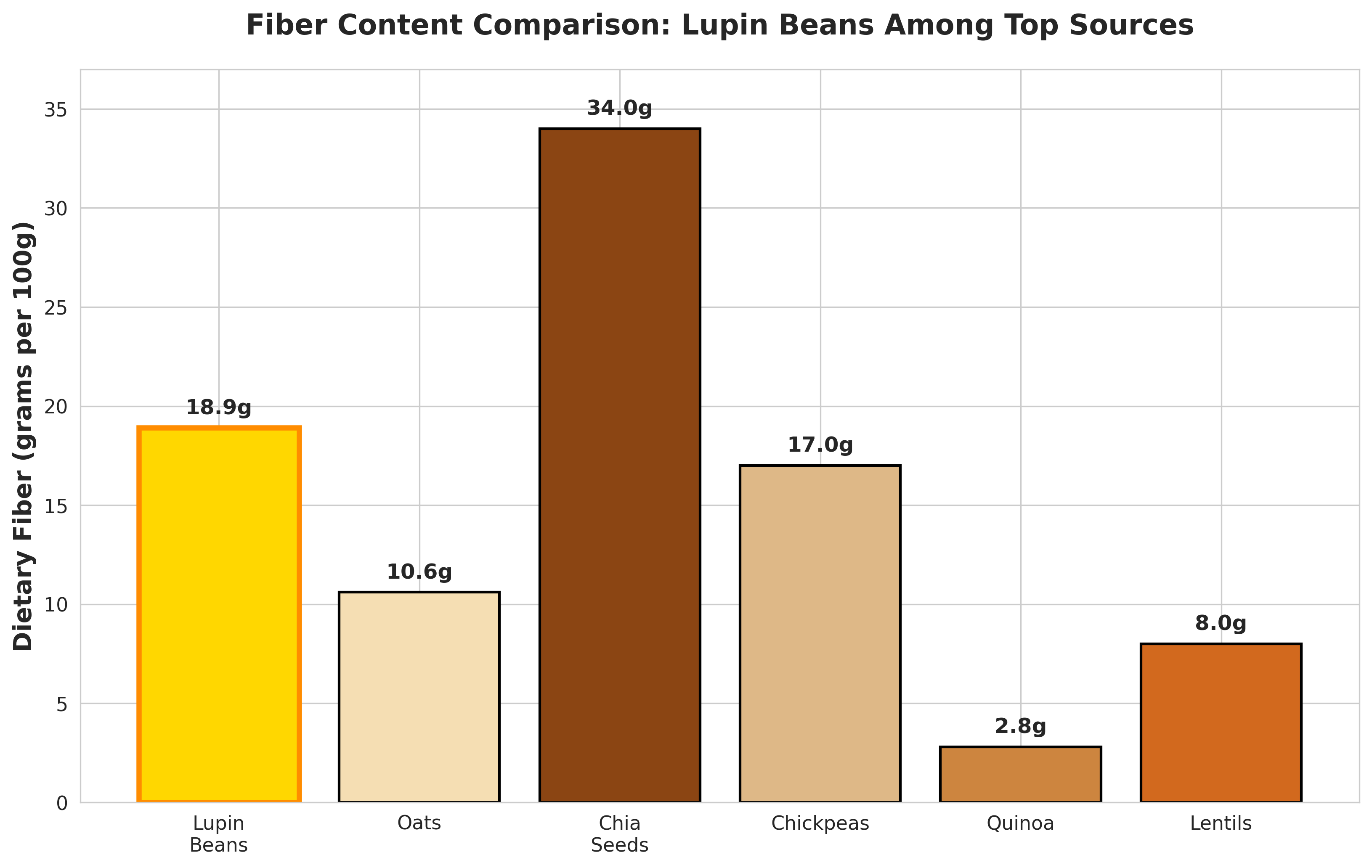
This fiber is largely prebiotic, meaning it acts as food for the beneficial bacteria in your gut. A thriving gut microbiome is linked to a stronger immune system, reduced inflammation, better mood, and improved digestion. By nourishing your gut bacteria, lupin helps create a healthy internal ecosystem.
6. A Rich Source of Essential Minerals for Energy and Vitality
Lupin is not just a source of macros; it’s a mineral powerhouse, delivering a potent dose of nutrients that are crucial for your energy and vitality.
•Iron: With nearly three times the iron of kale, lupin helps transport oxygen throughout your body, fighting fatigue and keeping you energized.
•Magnesium: This vital mineral is involved in over 300 biochemical reactions in the body, including muscle function, nerve function, and energy production. Lupin provides a significant source of magnesium to keep your body running smoothly.
•Zinc: Essential for immune function and wound healing, the zinc in lupin helps keep your body’s defense systems strong.
7. A Foundation for Strong and Healthy Bones
We often associate bone health with dairy, but lupin provides a powerful plant-based combination of minerals essential for building and maintaining a strong skeleton.
Lupin is a good source of calcium, the primary building block of bones. But just as importantly, it is also rich in phosphorus and magnesium, two minerals that work in synergy with calcium to create strong, dense bone tissue. This makes lupin an excellent food for preventing osteoporosis and supporting skeletal health throughout your life.
8. A Gluten-Free, Low-Carb Dream
For those following a gluten-free, keto, or low-carb lifestyle, finding satisfying and nutritious foods can be a challenge. Lupin is a perfect fit. It is naturally 100% gluten-free, making it a safe and delicious choice for individuals with celiac disease or gluten sensitivity.
Furthermore, its incredibly low carbohydrate content makes it ideal for ketogenic and low-carb diets. Lupin flour can be used to create low-carb breads, pastas, and baked goods that are both delicious and nutritious, without the carb load of traditional wheat-based products.
9. A Sustainable Choice for a Healthier Planet
Choosing lupin is a decision that benefits not only your health but also the health of the planet. It is one of the most sustainable and environmentally friendly crops you can eat.
As a nitrogen-fixing legume, lupin naturally enriches the soil it grows in, reducing the need for harmful chemical fertilizers. It is also a hardy, drought-tolerant crop that can grow in poor soil conditions where other plants might fail. This resilience makes it a key player in building a more sustainable and regenerative food system.
10. An Antioxidant-Rich Food to Fight Inflammation
Chronic inflammation is at the root of many modern diseases. Lupin is rich in polyphenols and other antioxidants, powerful plant compounds that help protect your body from damage caused by free radicals.
By neutralizing these harmful molecules, the antioxidants in lupin help to reduce inflammation, protect your cells, and lower your risk of chronic disease.
The Takeaway: A Small Bean with Mighty Benefits
The evidence is overwhelming. The lupin bean is a nutritional powerhouse that offers a profound range of health benefits. From its unparalleled protein and fiber content to its rich mineral profile and unique bioactive compounds, lupin has earned its place as one of the world’s healthiest foods.
Whether you are looking to manage your weight, control your blood sugar, build muscle, or simply live a healthier, more vibrant life, lupin is the superfood that can help you achieve your goals.
Ready to dive deeper?
Learn how lupin stacks up in our Definitive Nutritional Showdown or get the full story in our Ultimate Guide to Lupin Protein.
References
[4] Lupin Gold. (2025). Lupin vs Soy vs Pea vs Whey – What Wins?. Retrieved from
[5] FoodData Central. (n.d. ). U.S. Department of Agriculture. Retrieved from